Karnataka expands AB-ArK cover for Guillain‑Barré Syndrome treatment, adds IVIG support
Karnataka has expanded its Ayushman Bharat Arogya Karnataka (AB-ArK) scheme to include IVIG therapy for Guillain‑Barré Syndrome, a rare autoimmune condition that can cause severe weakness and paralysis. The move aims to reduce out-of-pocket costs, though doctors note caps may not suit every patient’s dose needs.
The Karnataka government has expanded coverage under its Ayushman Bharat Arogya Karnataka (AB-ArK) health scheme to include Intravenous Immunoglobulin (IVIG) therapy for Guillain‑Barré Syndrome (GBS). The change is intended to make a critical but expensive treatment more accessible for patients who would otherwise struggle with large out-of-pocket hospital bills.
GBS is a rare autoimmune neurological condition in which the immune system attacks peripheral nerves, leading to weakness that can worsen rapidly and, in severe cases, cause paralysis. Because the condition can escalate quickly, timely hospital care and appropriate therapy become essential to improve outcomes and reduce complications.
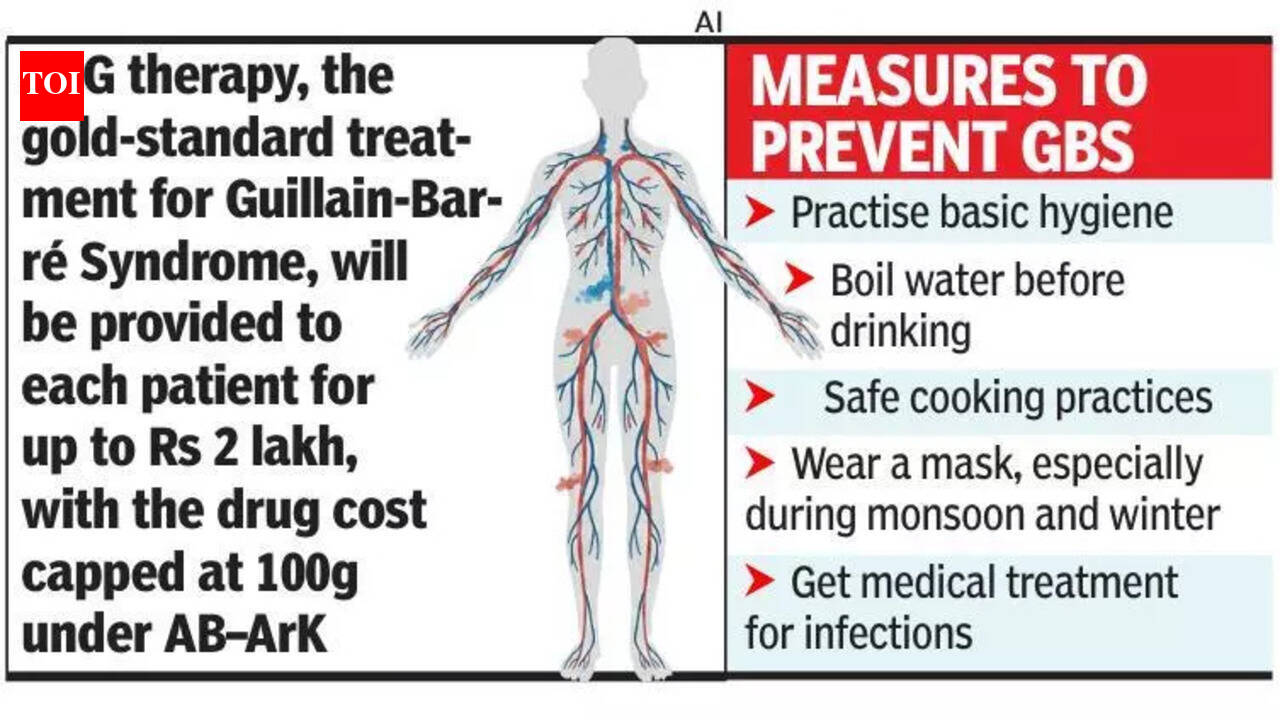
IVIG is widely used in GBS management but can be costly, particularly in private facilities. Under the AB-ArK update reported, IVIG is capped at ₹2 lakh per patient and covers up to 100 grams at a state-fixed price, a move meant to lower financial barriers and avoid treatment delays driven by affordability.
However, neurologists have cautioned that a fixed cap may not fit all cases because IVIG dosing is weight-based. Some patients may require higher total grams than the capped amount, potentially leaving families to bridge the gap if additional doses are clinically needed.
The report also noted that GBS cases can show a seasonal pattern, with upticks sometimes seen in monsoon and winter periods, often following diarrhoeal or respiratory infections. That context matters for public hospitals and insurers because clusters can strain neurology capacity and critical care resources.
Overall, the policy update is designed to reduce catastrophic health spending for a serious condition, while the debate around caps highlights a recurring health-financing challenge: creating predictable benefit limits without unintentionally restricting clinically appropriate care for patients with higher-than-average treatment requirements.