Budget 2026 watch: Experts flag India’s public health spend below 2% of GDP, urge sustained funding push
With Union Budget 2026-27 approaching, analysts and healthcare voices are calling for higher public healthcare spending, citing disease burden, out-of-pocket costs and system pressure. Reports note India’s public health spend remains under 2% of GDP, below global and middle-income benchmarks.
NEW DELHI: As preparations build for the Union Budget 2026-27, healthcare experts and industry voices are urging the government to raise public health spending, warning that underfunding is colliding with rising disease burdens and persistent out-of-pocket costs for households.
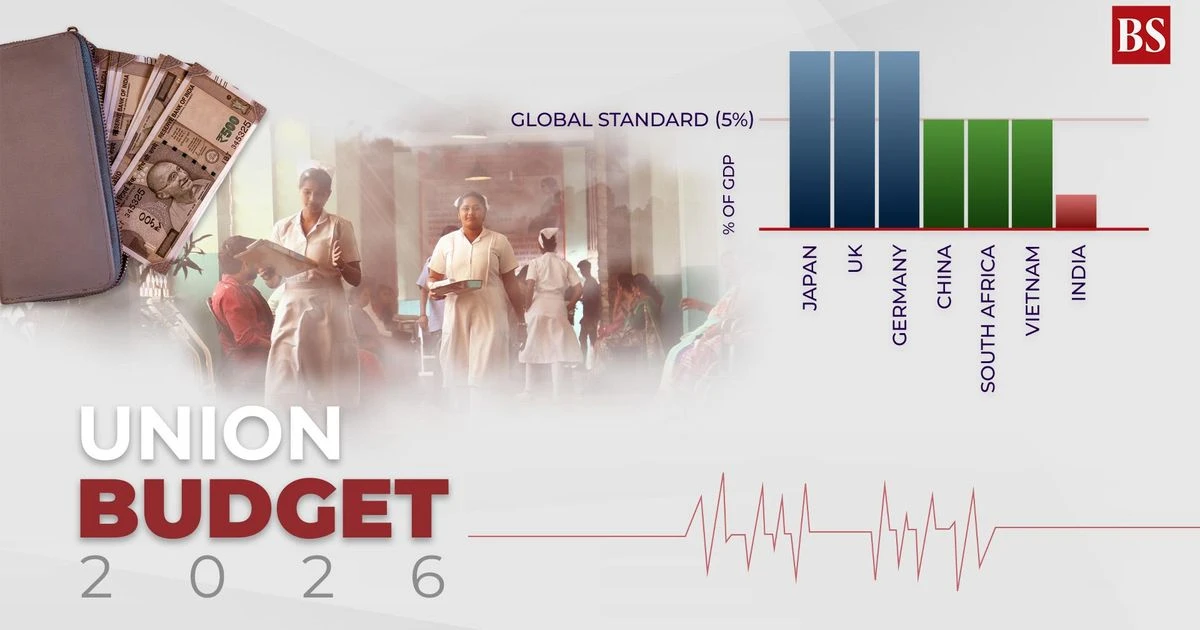
One strand of the current debate focuses on the headline metric: India’s public health expenditure remains under 2% of GDP, according to recent reporting that cites National Health Accounts estimates and broader government assessments. Health economists argue that this level of spending is low compared with global standards and many middle-income peers.
The concern is not only the size of budgets but the consequences of constrained public capacity—crowded facilities, uneven access across states and high dependence on private spending for everyday care. As non-communicable diseases rise and demand for specialty and long-term care expands, the system faces a dual challenge of scale and complexity.
Stakeholders are also pointing to the National Health Policy target of 2.5% of GDP as a benchmark that has yet to be reached. The argument is that higher public investment can reduce catastrophic health expenditure for families while strengthening primary care, workforce capacity, diagnostics and referral infrastructure.
Budget decisions will determine whether 2026-27 becomes a turning point or another year of incremental increases. With health outcomes tied to labour productivity and household financial stability, analysts increasingly frame the spending question as an economic risk issue—not only a social sector demand.