‘A successful India makes the world more stable,’ EU chief says after Republic Day, ahead of India–EU summit
European Commission President Ursula von der Leyen said a successful India makes the world more stable, prosperous and secure after attending India’s Republic Day celebrations in New Delhi. She and European Council President Antonio Costa were chief guests at the parade. Their remarks and visit come just before the India–EU summit scheduled for 27 January 2026, where trade and strategic cooperation are set to dominate discussions.
EU’s message from New Delhi: India’s rise is global stability
After attending India’s 77th Republic Day celebrations on 26 January 2026, European Commission President Ursula von der Leyen publicly framed India’s growth as a global good. In a social-media post following the ceremony, she said a successful India makes the world “more stable, prosperous and secure,” adding that “we all benefit.”
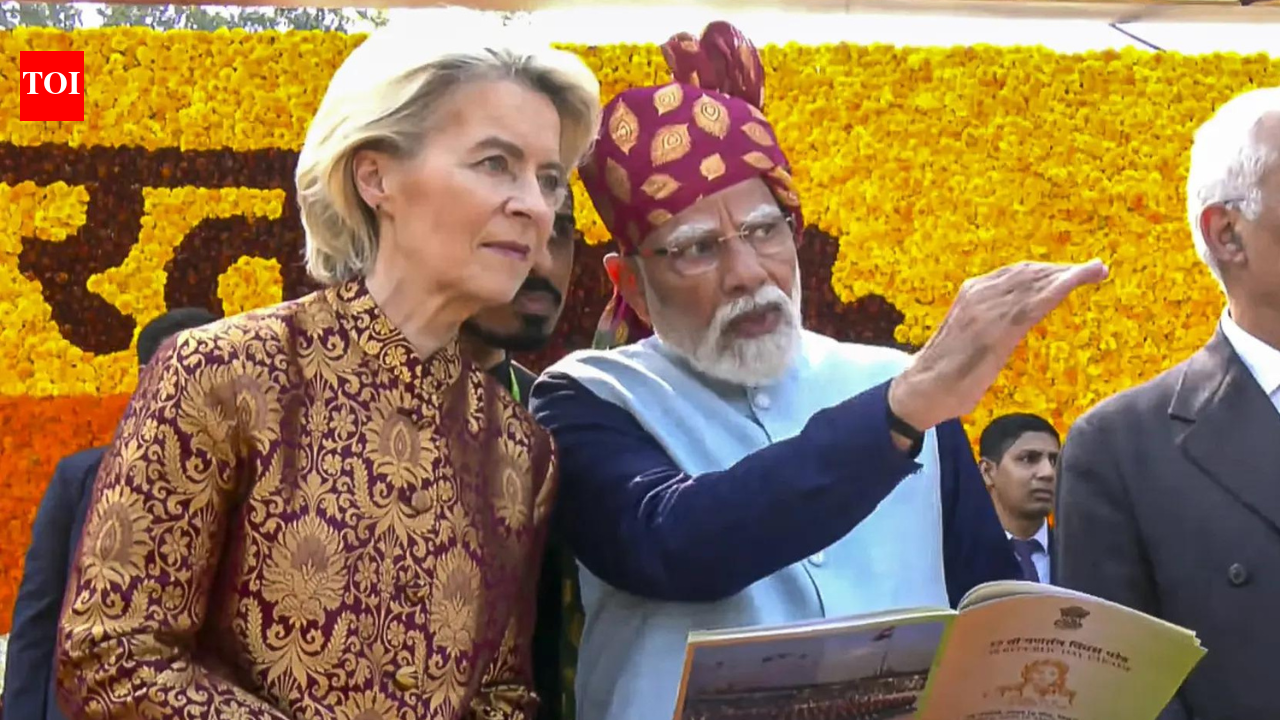
Von der Leyen and European Council President Antonio Costa were the chief guests at the parade at Kartavya Path in New Delhi, making it a rare moment where two of the European Union’s top leaders jointly took centre stage at India’s national celebration.
Why the statement is more than symbolism
The comment lands amid intensified India–EU engagement, with leaders and officials signalling momentum toward a major package of outcomes. In diplomatic terms, the framing of India’s success as “stability” and “security” language is notable because it situates India not only as a market but also as a strategic actor within Europe’s broader worldview.
The visit is closely tied to the India–EU summit scheduled for 27 January 2026. With trade, technology partnerships and wider strategic coordination on the agenda, the Republic Day appearance works as a public preface to closed-door negotiations.
The summit context: trade deal momentum and strategic alignment
Both sides have been hinting at significant progress on a long-discussed free trade agreement, and the summit is expected to take stock of last-mile issues. Even when details remain under negotiation, leaders often use such high-visibility visits to set a shared narrative: trust, openness, and long-term alignment.
For Indian audiences, the message also functions domestically: it signals that India’s political and economic trajectory is being courted by major blocs, and that New Delhi’s international relevance is being asserted at the highest levels of European leadership.