Republic Day diplomacy: EU leaders attend New Delhi parade as global partners send greetings
India’s Republic Day celebrations on 26 January 2026 carried a diplomatic signal as top European Union leaders attended the parade in New Delhi. Global partners, including the United States, also publicly marked the occasion, reflecting how the national event doubles as a showcase of India’s international relationships.
A national day with global attention
India’s Republic Day is a domestic commemoration, but the chief-guest tradition and the parade’s international viewership make it a regular moment of global diplomacy. On 26 January 2026, that international angle was especially visible as senior European Union figures were present at the celebrations in New Delhi, reinforcing the message that India’s partnerships are increasingly multi-aligned and high-level.
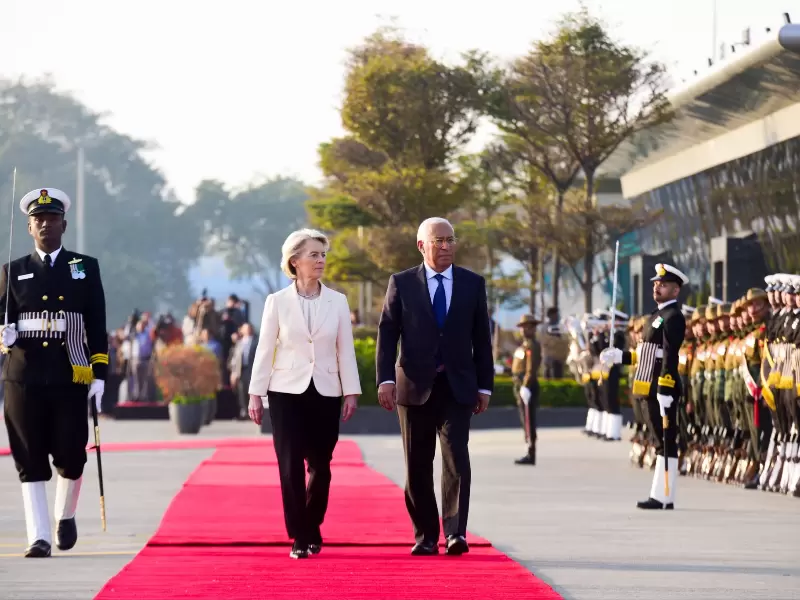
The Kartavya Path parade—known for its military display and cultural tableaux—offered visiting dignitaries a curated view of India’s priorities: defence readiness, indigenous capability, and civilisational diversity. Such visits, beyond their symbolism, are often interpreted as signals of political closeness and a desire to keep channels active amid a more fragmented global environment.
Europe’s presence and the broader diplomatic picture
Reports from the day noted the attendance of European Council President Antonio Costa and European Commission President Ursula von der Leyen. Their presence drew attention because it places the EU’s top institutions at a marquee Indian national event, and because Republic Day guest lists can shape interpretations about strategic priorities.
Separately, the United States also used the occasion to extend greetings to India, describing the bilateral relationship as deep and historic and pointing to ongoing cooperation. Public congratulations can appear routine, but they also operate as diplomatic signalling—particularly when major partners compete and collaborate across trade, security, technology, climate and global governance.
Why these gestures matter
In 2026, international relationships are increasingly judged by visible moments: leader visits, joint appearances and public statements. Republic Day, with its scale and broadcast reach, is precisely that kind of stage. For India, inviting and hosting prominent guests helps underline its standing as a central player in a region shaped by economic competition, security anxieties and new supply-chain strategies.
For the EU and the US, publicly engaging with India on a defining national day is also a way to reaffirm interest and keep diplomatic narratives positive. While the parade remains an Indian celebration first, the day’s guest list and official greetings illustrate how national rituals can carry international meaning—quietly but unmistakably.