India’s Republic Day parade to spotlight indigenous firepower, new units and battle-ready formations
As India heads into Republic Day on January 26, 2026, the centrepiece parade on Kartavya Path is set to put the spotlight on indigenous missile systems, armoured platforms and first-time ceremonial debuts by newly raised units. The display, officials say, is meant to underline operational readiness alongside tradition—while also reinforcing the push for self-reliance in defence manufacturing.
A parade built around frontline, made-in-India capability
The Republic Day parade in New Delhi on Monday, January 26, 2026, will feature a wide set of indigenous and frontline military platforms, including the BrahMos cruise missile, Akash air defence system, the Main Battle Tank Arjun and the Universal Rocket Launcher System (URLS) ‘Suryastra’. The emphasis this year is not only on ceremonial spectacle but on showcasing systems and formations that reflect current battlefield requirements and the broader “Aatmanirbhar” defence manufacturing drive.
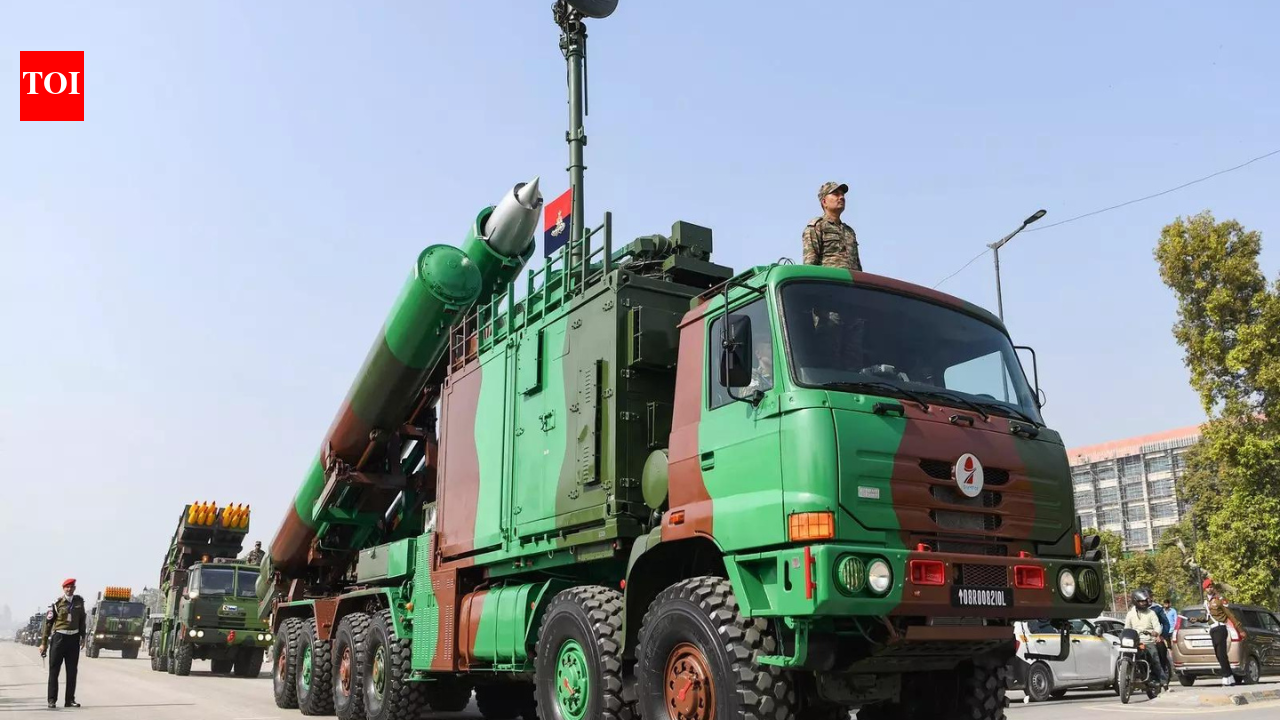
Officials have indicated that Army columns will move in a phased “battle array formation”, designed to resemble operational deployment rather than purely ceremonial marching order. The idea, as described in briefings, is to demonstrate preparedness through a structured flow of reconnaissance, mechanised power, air support and missile capabilities.
First-time appearances and new formations
Several newly raised units and distinctive formations are expected to participate for the first time. Reports note the debut of the Bhairav light commando battalion and the Shaktiban Regiment in the ceremonial line-up, alongside unique animals associated with high-altitude and desert logistics. The mounted contingent of the 61 Cavalry is also expected to appear in full battle gear, shifting away from its traditional ceremonial dress—an intentional signal that the parade is leaning into combat readiness imagery.
Armour, helicopters and missiles: the combat story arc
The mechanised segment is expected to include T-90 Bhisma tanks and the indigenous Arjun tank, supported by attack and utility aviation. Air elements referenced for the parade include the indigenous Dhruv Advanced Light Helicopter and its armed variant Rudra, as well as Apache AH-64E and the Prachand light combat helicopter. Other platforms expected to be part of the rolling display include the BMP-II Infantry Combat Vehicle, and missile assets such as the Nag (Tracked) Mk-2.
A major crowd draw is usually the missile and air-defence line-up. The parade is expected to feature a range of systems, including BrahMos and Akash, and additional air-defence and artillery systems referenced in briefings. The URLS ‘Suryastra’, described as a surface-to-surface strike system with up to 300 km range capability, is among the first-time showcases highlighted in reports.
The fly-past and the broader message
The aerial fly-past—one of the parade’s defining moments—will again be positioned as the closing punctuation mark to the ground display, highlighting the Air Force’s role in integrated operations. Overall, the parade’s storyline blends heritage with hard capability: a public demonstration of scale, indigenous production and the ability to field combined-arms formations across domains.