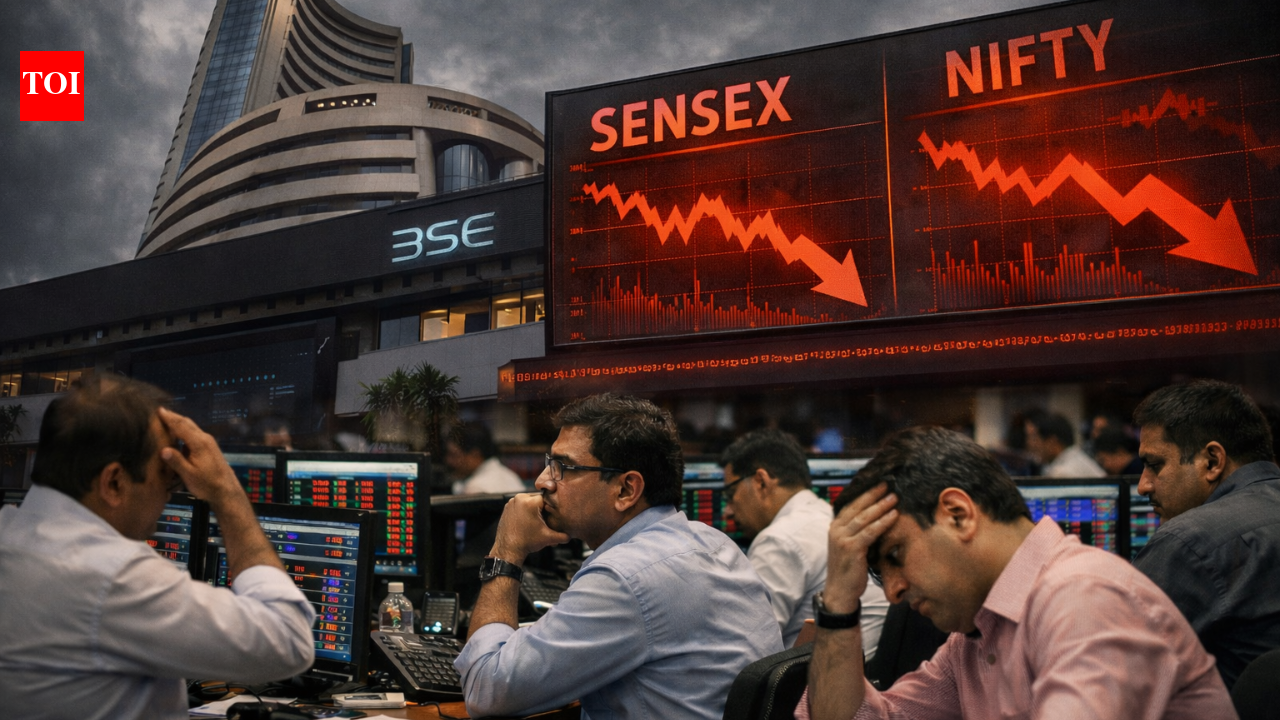
January slump for Indian equities: Sensex and Nifty down over 4% amid FPI selling, weak rupee and global risk-off mood
India’s benchmark equity indices fell more than 4% in January 2026, weighed down by foreign portfolio investor outflows, rupee weakness, subdued earnings and global uncertainty. Analysts said markets often turn volatile around the pre-Budget stretch, with investors watching for cues on growth support, fiscal discipline and macro stability in the Union Budget 2026–27.
Markets slide as January turns risk-heavy
India’s major stock indices extended a weak January run in 2026, with both the Sensex and the Nifty falling by more than 4% during the month. The decline was attributed to a mix of domestic and global pressures: sustained foreign portfolio investor (FPI) selling, a weakening rupee, underwhelming corporate earnings in key sectors, and elevated geopolitical uncertainty feeding a broader risk-off mood.
Market participants pointed to the compounding effect of global concerns—tariff-related anxieties, volatile crude oil prices and higher global bond yields—alongside earnings disappointments in heavyweight stocks. Together, these factors reduced risk appetite and increased caution among investors at a time when liquidity-sensitive assets typically respond sharply to global sentiment swings.
Why the pre-Budget period matters
Analysts highlighted that January can historically be a soft patch for equities, and that pre-Budget positioning often produces choppy price action. Some strategists noted a recurring pattern in which markets see a sharp fall and then attempt a recovery after Republic Day as attention shifts towards Budget announcements and policy signalling.
With Union Budget 2026–27 approaching, investors are watching for a balancing act: measures that support growth without undermining macro stability. Broader expectations revolve around how the government calibrates fiscal discipline, public spending priorities, and reforms that can sustain domestic growth resilience even if global headwinds persist.
- Month-to-date move: Sensex and Nifty down over 4% in January 2026.
- Key drivers: FPI outflows, weak rupee, muted earnings, geopolitical tension and tariff concerns.
- Near-term catalyst: Union Budget 2026–27 expectations and post-Republic Day positioning.
The immediate question for Dalal Street is whether the sell-off is a temporary pre-Budget shakeout or the early phase of a longer de-risking cycle driven by external shocks and earnings pressure.