Markets in January 2026: Sensex and Nifty down over 4% amid FPI outflows, rupee pressure and global risks
India’s benchmark indices fell more than 4% through January 2026, with market commentary pointing to sustained foreign portfolio investor selling, rupee weakness, muted corporate earnings and global uncertainties. Traders are now watching whether the typical pre-Budget season pattern—sharp January weakness followed by a rebound—repeats this year.
A weak January for Indian equities
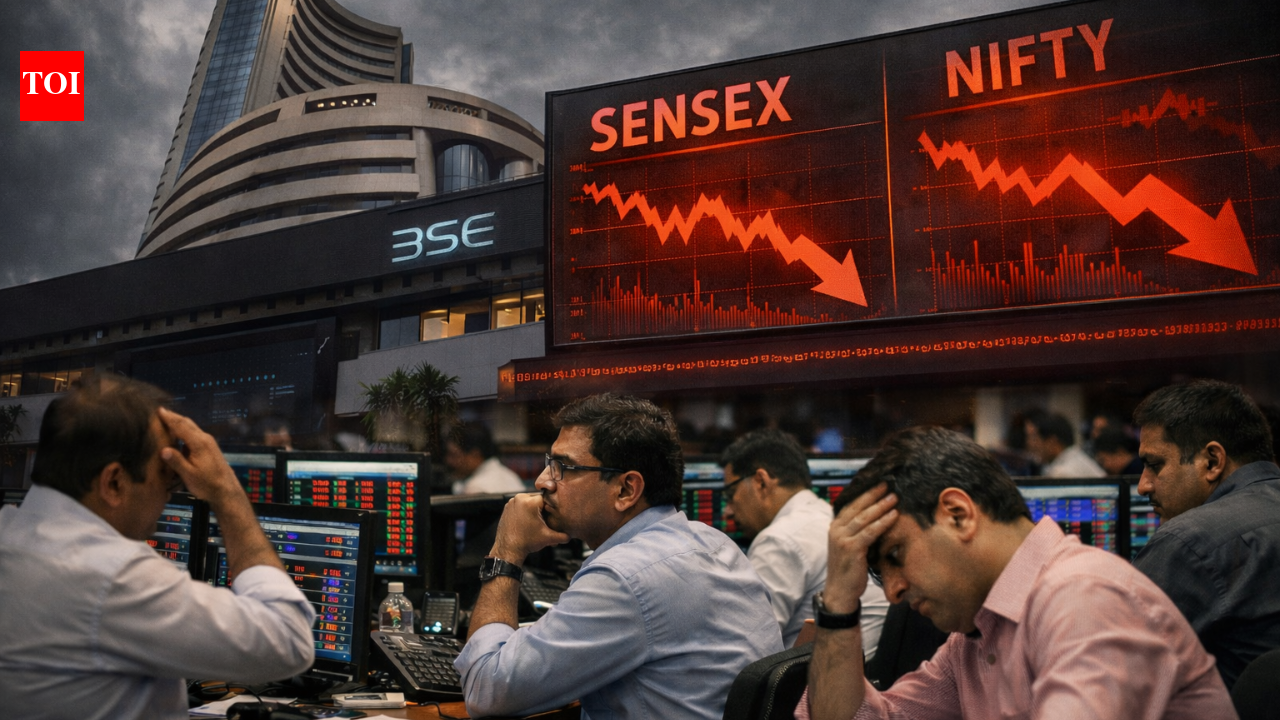
India’s stock benchmarks extended their January slide, with the BSE Sensex and NSE Nifty down by more than 4% during the month. Market participants attributed the fall to a combination of factors rather than a single trigger: persistent foreign portfolio investor (FPI) outflows, a weakening rupee, and corporate earnings that failed to decisively lift sentiment. The broader global backdrop, including geopolitical and trade-related worries, also weighed on risk appetite, amplifying day-to-day volatility in large-cap counters.
What’s driving the pressure: flows, currency and expectations
FPI selling is often a key determinant of near-term market direction because it can overwhelm domestic buying during risk-off phases. When this coincides with rupee weakness, it creates a feedback loop: global investors become more cautious, import-cost concerns grow, and the market’s sensitivity to external shocks increases. Alongside flows and currency moves, investors have also been navigating earnings that, in many cases, did not provide the kind of upside surprise needed to counter macro uncertainty.
All eyes on the usual pre-Budget rhythm
Some strategists note that January has historically been a soft month, and that sharp pre-Budget declines have sometimes been followed by a recovery after Republic Day and into Budget season. Whether that pattern repeats in 2026 will likely depend on the interaction between global risk sentiment and domestic policy expectations. Investors are monitoring any signals that could stabilise flows, support the rupee, and rebuild confidence around growth and inflation management.
What investors are tracking next
- The pace of FPI outflows and whether domestic institutions offset selling pressure.
- Rupee stability and the impact of global rate and trade expectations on emerging-market positioning.
- Earnings revisions and whether results season meaningfully changes the narrative.
- Budget-related expectations, including policy continuity, capex signals and sector-specific incentives.
Markets are trying to separate short-term risk-off moves from longer-term India growth expectations, a balancing act that becomes harder when global uncertainty rises.