Sensex and Nifty extend January slide as FPIs sell, rupee weakens and global risk appetite cools
Indian equities stayed under pressure through January as benchmark indices fell more than 4% for the month, driven by persistent foreign portfolio selling, a weaker rupee, muted earnings and global uncertainty. Investors are now watching whether the traditional pre-Budget volatility gives way to a late-month rebound.
India’s benchmark equity indices remained on the back foot in January 2026, with both the Sensex and Nifty down more than 4% for the month as a cluster of domestic and global headwinds weighed on sentiment. Market data cited in reports showed the 30-share BSE Sensex falling 3,682.9 points (about 4.32%) and the 50-share NSE Nifty dropping 1,080.95 points (around 4.13%) through late January.
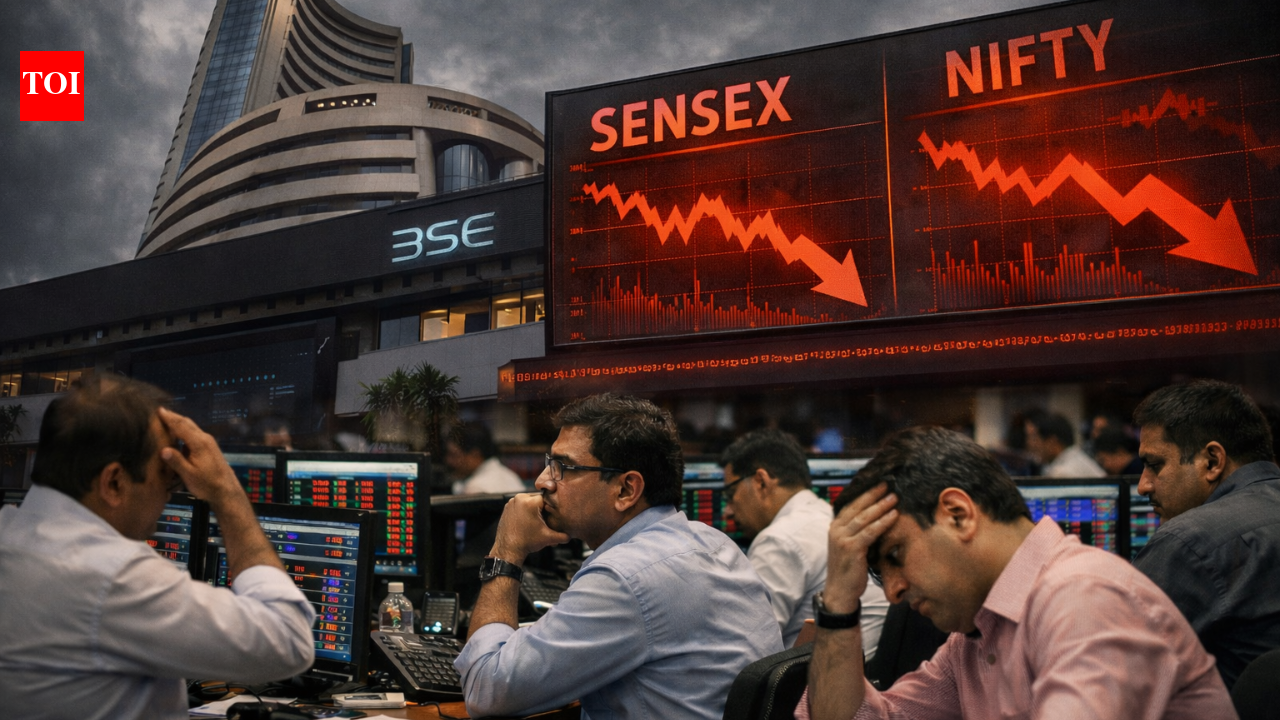
A key drag has been sustained selling by foreign portfolio investors (FPIs), reflecting a broader “risk-off” mood in global markets. The selling pressure also fed into currency stress, with the rupee weakening to record lows during the month, adding another layer of caution for equity traders and policymakers tracking imported inflation and external balances.
Commentary in the report linked the sell-off to geopolitics, renewed tariff concerns, elevated crude oil prices and higher global bond yields, all of which can tighten financial conditions and reduce appetite for emerging-market exposure. At home, investors also digested earnings disappointment in select heavyweight sectors, a factor that often amplifies index-level moves when large constituents underperform.
Market participants are also looking at seasonality and the fiscal calendar. Analysts noted that January can be a historically weak month for equities and that pre-Budget turbulence sometimes reverses into a recovery later in the period. The upcoming Union Budget 2026–27 is expected to influence expectations around growth support, fiscal consolidation and sectoral allocations.
Whether the market stabilises will depend on a combination of global cues and domestic signals: the trajectory of the rupee, the pace of foreign flows, crude prices and yields, and the clarity investors get on India’s policy direction as Budget discussions intensify. For now, the January tape has been defined by caution rather than conviction.