Sensex and Nifty slip over 4% in January amid foreign outflows, rupee weakness and global risk-off mood
India’s benchmark indices have fallen more than 4% so far in January 2026, with market participants citing sustained FPI selling, a weakening rupee, muted earnings and global uncertainties including geopolitical tensions and tariff worries. Investors are now watching whether sentiment turns ahead of the Union Budget.
Markets in a January drawdown
India’s equity benchmarks have had a weak start to 2026. Market data show the BSE Sensex and NSE Nifty down more than 4% so far in January, reflecting a combination of domestic and global pressures. The decline has been attributed to sustained foreign portfolio investor (FPI) outflows, a softer rupee, and corporate earnings that have not met expectations across some heavyweight sectors.
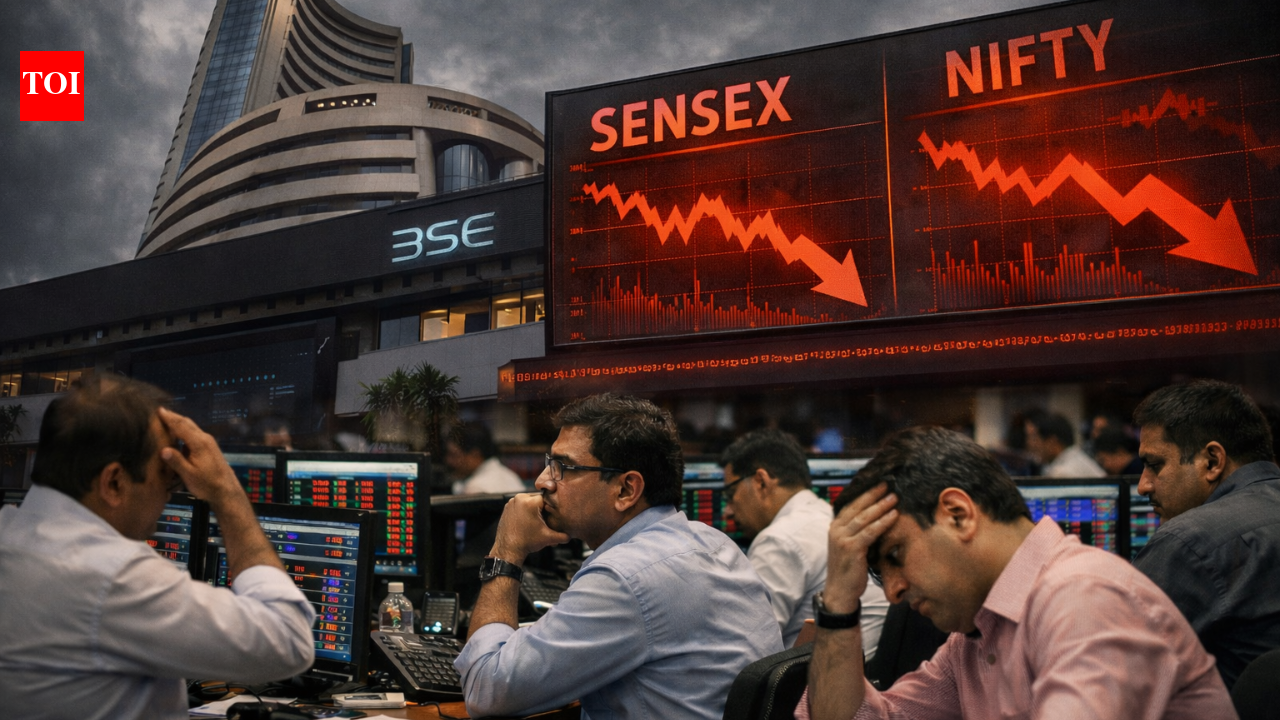
The move also fits a pattern that traders track closely: January has often been a challenging month for equities, and the market frequently searches for a catalyst to reverse risk appetite. With Budget 2026-27 approaching, investors are asking whether the familiar pre-Budget turbulence will again be followed by a rebound, or whether global conditions will continue to dominate domestic cues.
What’s driving the slide: FPIs, the rupee, earnings and global risks
Foreign selling has remained a major overhang, with global investors turning cautious as uncertainty increases. A weakening rupee adds to the sense of vulnerability by amplifying imported cost pressures and signalling capital-flow stress, even as some exporters benefit. Meanwhile, earnings disappointments from select large firms—especially in segments like IT, banking and consumption-linked pockets—have further reduced conviction.
On the global side, investors have been watching elevated crude oil prices, higher global bond yields, and a broader “risk-off” environment. Renewed concerns around international tariffs and geopolitical tensions have also fed into the cautious mood. In such a setting, the market’s default response has been to cut exposure, rotate defensively, or wait for clearer guidance.
Budget expectations and what investors may watch next
Attention is now shifting to the Union Budget and whether it can balance growth support with macro stability. Participants will scrutinise how the government signals fiscal discipline while addressing growth priorities, as well as any measures aimed at stimulating investment, supporting consumption, or improving the business environment.
A key question for February is whether domestic policy clarity can offset global uncertainty. If foreign flows stabilise and earnings fears ease, equities could attempt a rebound. But if the global backdrop stays volatile—particularly through crude, rates, and tariff headlines—Indian markets may continue to trade defensively, even with supportive domestic fundamentals in some segments.