Thiruvananthapuram district reported a sharp rise in fever cases in January 2026, with over 11,000 people seeking treatment, alongside confirmed dengue and leptospirosis cases, prompting tighter surveillance and public health measures.
An academic study released ahead of the Union Budget 2026-27 argues India should increase public healthcare expenditure, warning that rising medical costs and uneven access are deepening inequality. The research analyses long-term data and points to the need for stronger public funding to reduce household out-of-pocket burden and improve equitable access to care.
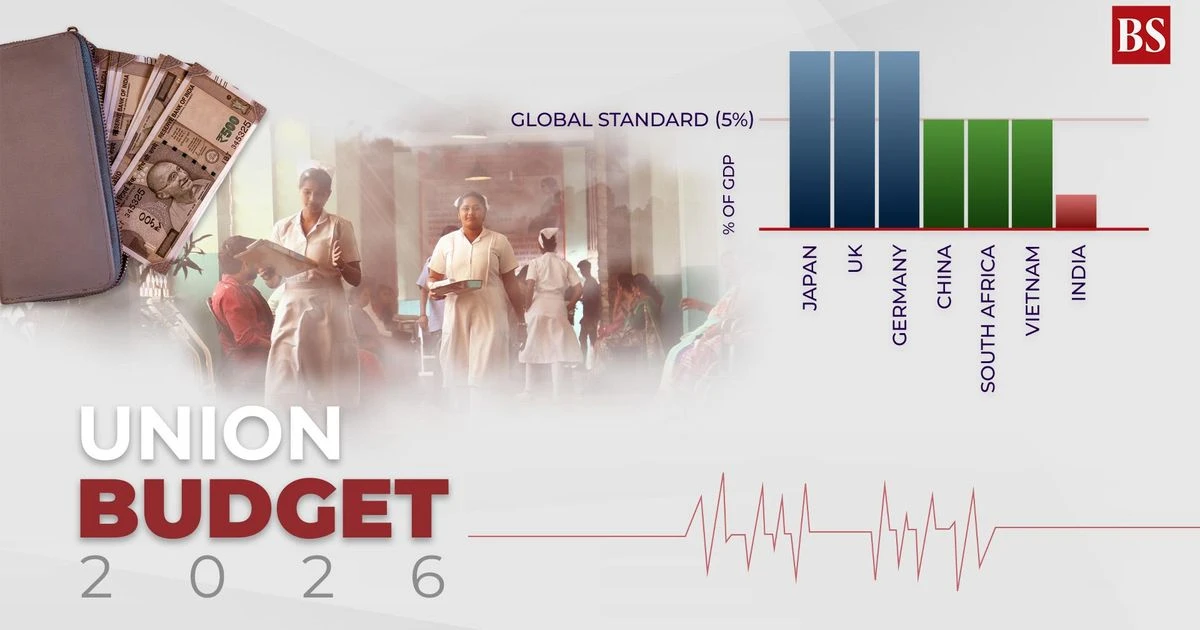
With Union Budget 2026-27 approaching, analysts and healthcare voices are calling for higher public healthcare spending, citing disease burden, out-of-pocket costs and system pressure. Reports note India’s public health spend remains under 2% of GDP, below global and middle-income benchmarks.
A minor in Mhow has tested positive for Hepatitis A as authorities continue surveys and water safety steps in affected areas. The episode follows ongoing concern in and around Indore over water quality and disease risk, with officials advising residents to rely on arranged tanker water in impacted localities.
An academic study released ahead of Budget 2026-27 argues India should raise public healthcare expenditure to counter rising medical costs and unequal access. The research analyses long-term drivers of health spending and highlights pressures on household out-of-pocket payments.
Ahead of the Union Budget 2026-27, an academic study has argued for a significant increase in public healthcare expenditure, warning that rising medical costs and uneven access are deepening inequality. The researchers say stronger public investment is essential to improve health infrastructure and expand affordable, universal access in a rapidly changing economy.
A Lancet Commission report launched in New Delhi outlines a roadmap for a rights-based, citizen-centred health system in India, recommending stronger public care, integrated services and better financing to achieve universal health coverage ambitions.
India’s National Zero Measles–Rubella Elimination campaign (2025–26) was launched to accelerate the goal of eliminating measles and rubella by 2026. The programme stresses full two-dose vaccination under the Universal Immunisation Programme and calls for stronger surveillance and community outreach to prevent outbreaks and close last-mile gaps.
Tension rose again in Indore’s Bhagirathpura area after the death of a 75-year-old retired teacher, with family members and residents alleging a connection to contaminated water. Health authorities disputed the claim, pointing to underlying medical conditions and stating available documents did not confirm typical diarrhoea symptoms. The episode has intensified public anger and political sparring as some residents remain hospitalised.
A report citing WHO provisional data says India was among the top countries reporting measles outbreaks in 2025, while India’s health ministry has pushed a Zero Measles-Rubella Elimination Campaign with emphasis on surveillance and last-mile coverage.
Two suspected Nipah virus cases reported in West Bengal triggered an immediate public-health response, with the Centre deploying a joint national team to support containment, surveillance and laboratory work alongside state authorities.
Indian health authorities have confirmed Nipah virus infections in two nurses at a private hospital near Kolkata, triggering heightened surveillance, contact tracing and quarantine protocols. Officials are investigating a suspected index case linked to a patient who died after severe respiratory symptoms. With Nipah known for high fatality and no approved cure or vaccine, public health teams have moved quickly to test contacts and monitor potential spillover sources.